What "company" should actually mean for a Bogura web app
A web application development company in Bogura is only as good as the one person who writes its hardest line of code.
Here is the trap a lot of Bogura owners walk into. The word "company" sounds safer than "freelancer" — a company has an office, a logo, a few people, surely it cannot just disappear. So when a stock system or a depositor portal or a fee-collection app is on the line, the instinct is to trust the company over the individual.
But pull back the curtain on most small web application development companies in Bogura and you find the same thing: one person who can actually build a real app, a couple of juniors learning on your project, and a bench of freelancers who rotate in and out as money allows. The salesperson who quoted you is not the person writing your database logic. The "company" is a brand wrapped around whoever is free that month.
When that one capable person leaves — and in this market they leave for Dhaka constantly — the company keeps the name and loses the only hands that understood your code.
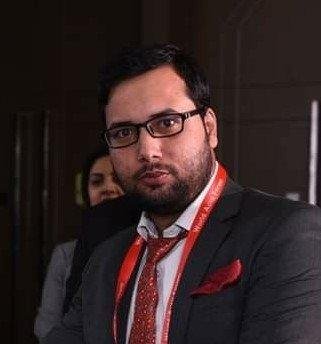
So I built the opposite, and I am honest that it is a deliberate choice, not a limitation. With me the company is the developer. The person you message on WhatsApp is the person who maps how your wholesale business or cold storage or coaching centre actually runs, designs the screens in Figma, writes the backend, wires bKash or Nagad if real money moves through it, tests the cases that quietly break cheap apps, and answers a year later when you need a change.
There is no handoff where the detail of your business gets lost between a salesman and a junior. For software — where one wrong decision in the data model early becomes an expensive, business-stopping bug later — that single thread of accountability is worth more than a printed company profile. There is nobody to pass the blame to. That is the entire point of the way I work.
It also matters because a web app is not a thing you buy once and forget. It is software your business sits inside every working day, and it needs an owner who will still pick up the phone. The wholesale trader in Borogola whose stock-and-dues system has to stay correct across two shops. The cold storage near the bypass whose depositor portal farmers check from a cheap Android during potato season. The coaching centre whose admission and fee app cannot lose a single payment record during the rush.
These are not demos. They are operations, and they need a company you can actually reach — not a support ticket queue, not a number that goes dead after the warranty, not a new junior every time who has to relearn your code from scratch. Because I wrote it, a fix that takes an unfamiliar developer three days usually takes me an afternoon.
Pricing is fixed, public and the same whether you are a one-shop trader or a multi-branch operator. Builds start at 50,000 BDT for a focused single-purpose app — a booking system with an admin panel, an order tool with advance and dues, a depositor lookup. 90,000 BDT for a multi-feature app with user accounts, roles and reporting. 1,50,000 BDT for a larger system with bKash or Nagad payments, inventory or multi-branch logic and proper dashboards.
Genuinely custom software, built from a blank canvas to fit exactly how your business runs, starts from 3,00,000 BDT. Always 50% advance and 50% on launch — bKash, Nagad or bank transfer — and you approve the full design before I write a line of application code. No retainer trap, no vague monthly bill, and the source code is handed to you at the end. You are hiring a company that cannot hold your software hostage, because the moment it launches, it is yours.
See pricing in BDT